
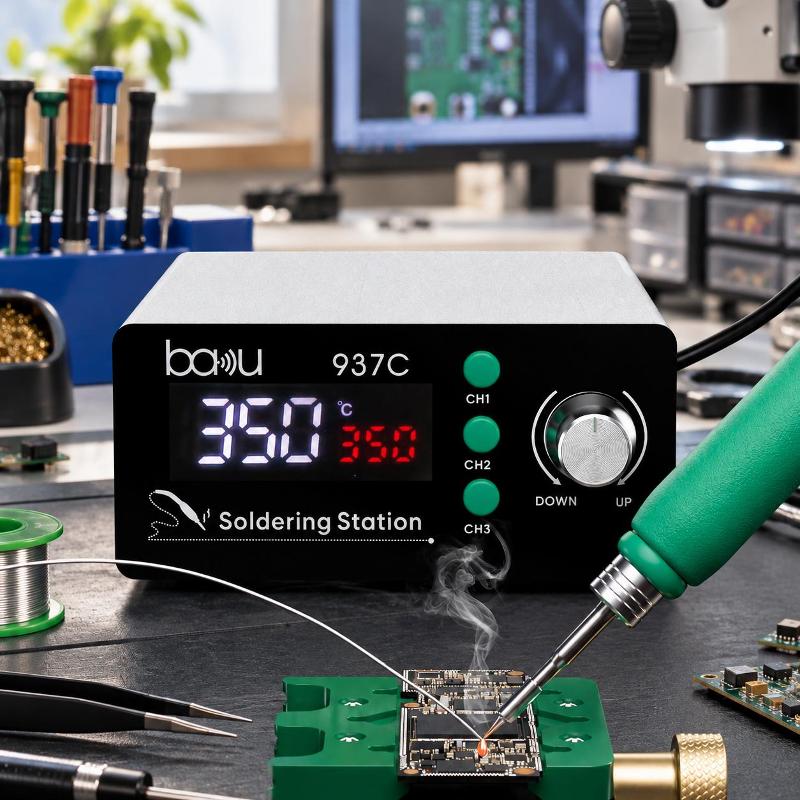
The demand for reliable electronic repair equipment has grown significantly as smartphones, tablets, and laptops become increasingly complex. Technicians working in service centers face a constant challenge: maintaining precision while managing thermal stress, component safety, and efficiency across diverse device models. Selecting the right electronic repair equipment collection determines whether a repair operation runs smoothly or encounters costly delays and damaged components.
Professional-grade electronic repair equipment serves as the foundation for any successful repair business. Whether handling motherboard-level repairs, screen replacements, or battery work, having tools that combine precision, durability, and safety features directly impacts both output quality and technician satisfaction. The market offers numerous options, but not all equipment meets the demanding standards required in modern repair environments.
Electronic repair equipment encompasses several distinct tool categories, each addressing specific repair challenges. Soldering stations handle microelectronic component work with controlled heat delivery. Rework fixtures stabilize devices during complex procedures, reducing accidental damage from movement or misalignment.
Precision hand tools—including specialized pry sets and screwdriver kits—enable technicians to safely disassemble casings without damaging components or device frames. Consumables like solder paste and flux support the soldering and rework process with consistent quality.
A comprehensive electronic repair equipment collection integrates these categories into a cohesive system rather than offering disconnected tools. This approach reduces setup time between repair tasks and ensures compatibility across workflows.
Soldering remains central to motherboard repair and microelectronic component replacement. The challenge lies in delivering stable, accurate heat without overshooting temperatures that damage surrounding components. Professional soldering stations feature constant temperature heating technology, ensuring that heat remains steady throughout the repair operation.
Temperature stability matters more than raw heating power. According to product specifications, a soldering station maintaining ±1°C accuracy prevents thermal stress on delicate solder joints and surrounding traces. LED digital displays allow technicians to verify operating temperature at a glance, reducing guesswork and human error during critical work.
Preset buttons streamline workflow by allowing rapid switching between common temperature ranges—a feature that accelerates repair cycles when handling multiple device types sequentially. Without preset functionality, technicians waste minutes manually adjusting temperatures, compounding delays across an 8-hour workday.
Mobile phone and tablet motherboards require secure positioning during soldering, desoldering, and component-level work. Generic clamps or makeshift holders introduce movement that compromises joint quality and risks component damage. Specialized rework fixtures address this by providing stable, repeatable clamping that accommodates device size variation.
A 360° rotating motherboard fixture with toughened glass panels offers several advantages. The rotation capability allows technicians to access different angles without moving the device itself, preserving solder joint alignment and preventing accidental bumps during the procedure. According to product specifications, toughened glass withstands temperatures up to 500°C, eliminating concerns about fixture degradation during hot air rework operations.
Clamping mechanisms that support a range of device sizes—typically 10-72mm according to product specifications—reduce the need for multiple fixtures. This flexibility enables a single fixture to handle everything from smartwatch screens to tablet motherboards, lowering equipment costs while maximizing space efficiency in compact service centers.
The fixture’s surface design matters as much as its thermal properties. A flat, level clamping surface ensures components sit flush during work, preventing solder bridges and misaligned connections that require rework.
Disassembly represents one of the most tactile, skill-dependent phases of device repair. Poor-quality prying tools damage phone frames, snap ribbon cables, and leave technicians frustrated. Professional-grade pry sets feature ultra-thin blades—specified at 0.1-0.2mm thickness—that slip beneath adhesive and components without imposing destructive pressure.

Variety in blade geometry—flat, pointed, and angled tips—accommodates different disassembly scenarios. Screen removal requires different leverage angles than ribbon cable access, so having multiple blade profiles eliminates the need to improvise with inappropriate tools that risk component damage.
Ergonomic design directly correlates with technician endurance and injury prevention. Silicone-wrapped handles with anti-slip textures reduce hand fatigue during extended repair sessions. Curved handle shapes follow the natural grip position, distributing pressure more evenly across the palm and fingers compared to straight handles that concentrate stress on specific points.
High-quality solder paste and flux significantly influence joint reliability and rework efficiency. BGA (ball grid array) solder paste formulations require precise alloy composition to prevent common defects like cold joints or bridging. Flux chemistry affects both the immediate soldering process and long-term joint reliability by reducing oxidation at the contact interface.
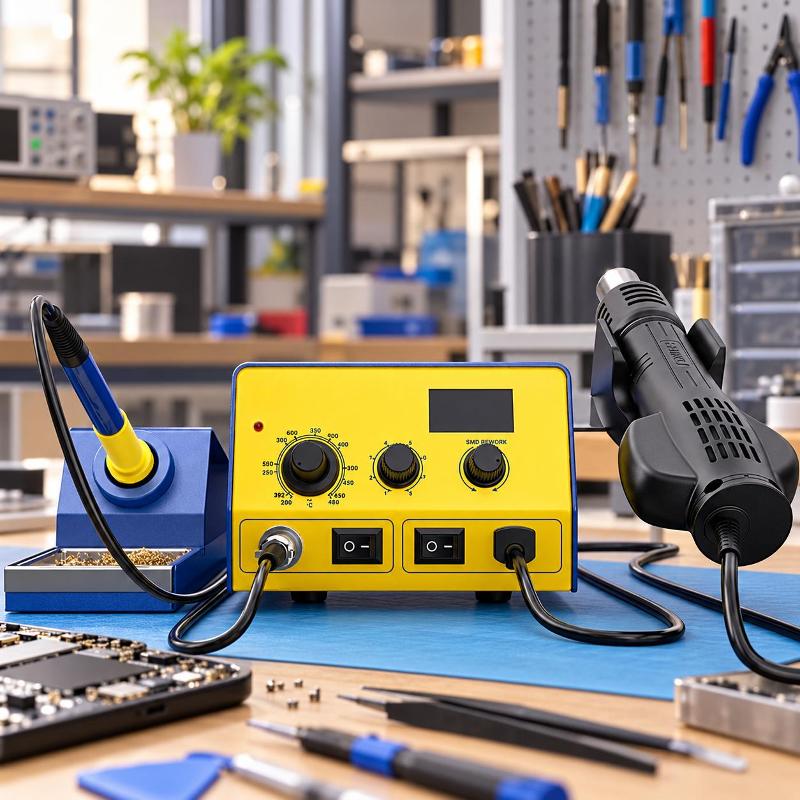
Consumable quality directly impacts defect rates. Inconsistent paste viscosity leads to bridging and incomplete wetting. Expired or improperly stored flux loses effectiveness, requiring higher temperatures that stress components. A comprehensive electronic repair equipment collection pairs soldering stations with matched consumables to ensure compatibility and predictable outcomes.
Storage matters as much as product selection. Solder paste degrades when exposed to temperature fluctuations or humidity. Maintaining proper storage conditions—cool, dry environments—preserves performance throughout the product shelf life.
Electrostatic discharge remains one of the primary causes of undetected component failure during repair. Technicians may unknowingly damage circuits, resulting in devices that fail weeks after returning to customers. Professional electronic repair equipment incorporates ESD-safe designs throughout the tool ecosystem.
ESD-safe fixtures use static-dissipative materials and grounding connections that safely route static charges away from sensitive components. Many include integrated grounding points where technicians connect wrist straps, creating a controlled static environment. This prevents charge buildup that accumulates during device disassembly and component handling.
Overload protection in soldering equipment prevents electrical surges from damaging iron tips or heating elements. Auto-sleep functions reduce power consumption and extend equipment lifespan by eliminating unnecessary heating during idle periods. These features reflect engineering maturity in professional-grade tools versus consumer-oriented alternatives that lack such safeguards.
Electric screwdrivers accelerate repetitive fastener removal and installation, particularly valuable when handling dozens of devices daily. A 41-in-1 electric screwdriver kit provides comprehensive bit selection while maintaining consistent torque application that prevents stripping or over-tightening.
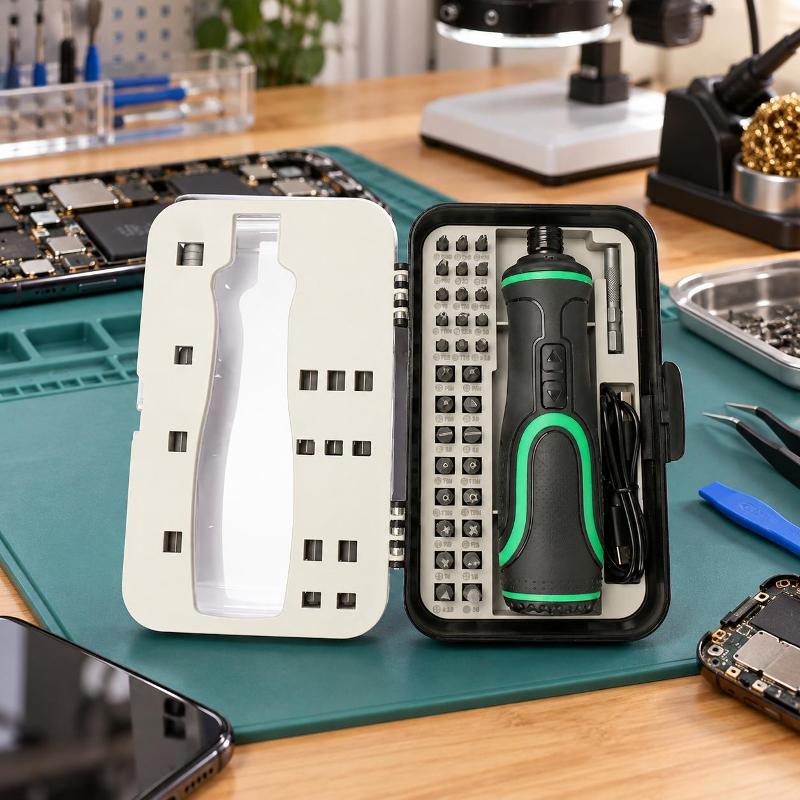
Forward and reverse functionality accommodates both removal and reinstallation without tool changes. Magnetic bit holders prevent small fasteners from dropping and disappearing into device cavities during work. Portable cases organize bits logically, reducing time spent searching for the correct size and keeping the workspace orderly.
Manual precision screwdrivers remain valuable for delicate work where torque control matters most. Electric tools excel at high-volume repetitive tasks, while hand-driven options provide superior feedback during low-torque applications. Professional service centers typically maintain both options rather than choosing exclusively.
Hot air rework equipment—used for BGA and SMD component removal—requires careful airflow management. Excessive velocity damages fragile solder balls or nearby components. Insufficient airflow fails to reach target temperatures, requiring longer heating cycles that stress the printed circuit board.
According to product specifications, professional hot air rework systems achieve airflow capacity up to 120L/min with graduated intensity controls. This range allows technicians to fine-tune delivery for different component types and PCB configurations. Digital displays showing real-time temperature and airflow readings prevent guesswork during complex rework procedures.
The nozzle design matters as much as raw airflow capacity. Directional nozzles concentrate heat precisely on target components while protecting surrounding areas. Interchangeable nozzle options accommodate various component sizes and package types, from small passives to large BGA arrays.
Electronic repair equipment effectiveness depends partly on tool integration within established workflows. Service centers handling high-volume repairs benefit from equipment configurations that minimize setup transitions between consecutive repair tasks. A soldering station paired with compatible fixtures, consumables, and precision tools reduces downtime when switching from phone screen replacement to motherboard-level work.
Inventory management becomes simpler when equipment comes from unified collections rather than mixing vendors. Compatible accessories—replacement iron tips, fixture adapters, consumable refills—streamline purchasing and reduce compatibility issues that arise when assembling equipment from multiple sources.
Training new technicians accelerates when equipment follows consistent design principles. Intuitive controls, logical button placement, and familiar operating sequences reduce the learning curve and minimize costly mistakes during the first weeks of employment.
Phone and tablet screen replacement demands precision pry tools and protective fixtures but minimal soldering capability. Motherboard-level repair requires comprehensive soldering stations, rework equipment, and thermal management. Battery replacement falls between these extremes, requiring hand tools but less sophisticated soldering infrastructure.
Consider these factors when evaluating electronic repair equipment collections:
Starting a repair business or expanding existing operations requires strategic equipment selection. Small-scale operations benefit from modular collections allowing gradual expansion as volume increases. Comprehensive professional-grade systems work better for established centers handling high repair throughput with diverse device types.
The cost-to-value ratio of professional electronic repair equipment becomes apparent quickly. Higher initial investment in quality tools reduces defect rates, accelerates repair cycles, and extends equipment lifespan compared to budget alternatives that require frequent replacement. A soldering station maintaining temperature stability prevents expensive component damage that single-handedly eliminates equipment savings within months.
Technician skill development accelerates with better equipment. Tools providing clear feedback—precise temperature control, stable device positioning, ergonomic design—enable faster skill acquisition than frustrating equipment that constantly introduces variables and inconsistency.
Professional electronic repair equipment represents ongoing infrastructure investment, not disposable purchases. Equipment longevity depends on build quality, component durability, and availability of replacement parts. Service centers requiring quick turnaround cannot afford extended downtime waiting for repairs or replacements.
Established manufacturers with decades of industry presence offer reliability assurance that newer competitors cannot match. Long-term relationships with suppliers provide access to technical support, troubleshooting guidance, and component availability when problems emerge. This institutional knowledge becomes invaluable when facing unusual repair scenarios or equipment failures during critical windows.
Warranty coverage and repair services vary significantly between manufacturers. Comprehensive warranties covering components and labor provide cost predictability, while limited warranties shift maintenance expenses to the service center. Evaluating total cost of ownership—not just purchase price—reveals the true financial impact of equipment choices over five to ten-year operational lifespans.
Professional electronic repair equipment ultimately determines whether service centers compete effectively in increasingly demanding market conditions. Quality tools enable consistent repair quality, faster completion times, and reduced scrap rates that directly impact profitability and customer satisfaction.

Choosing the Right Electronic Repair Equipment for Professional Service Centers
Professional electronic repair equipment including soldering stations, rework fixtures, and precision tools enables efficient, high-quality device repairs in service centers.
Stereo Microscope Price Guide: What Affects the Cost?
Discover what affects the price of a stereo microscope, including magnification, optical quality, digital features, lighting systems, and build materials. Learn how to choose the right model for electronics repair and precision inspection.

Stereo Microscope Uses: From Science Labs to Electronics Repair
Discover the key applications of stereo microscopes in biology labs, education, micro-soldering, and PCB repair. Learn how 3D magnification improves precision for scientific research and electronics technicians.

Best Stereo Microscope for PCB, Jewelry, and Laboratory Use
Discover the best stereo microscope for PCB repair, jewelry inspection, and laboratory research. Learn essential features, magnification tips, and top professional recommendations.

Industrial Stereo Microscope Applications in Electronics and Manufacturing
Discover how industrial stereo microscopes enhance precision in electronics, PCB inspection, micro-assembly, and manufacturing quality control. Learn key applications and benefits.
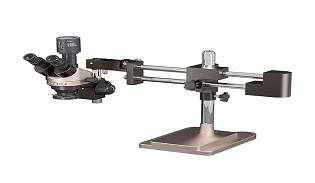
Compound vs Stereo Microscope: What’s the Difference?
Discover the main differences between compound and stereo microscopes, including magnification, applications, and working distance. Choose the right microscope for your needs.

STAY CONNECTED