
When working with miniature components, detailed surfaces, or complex structures, having the right type of microscope is essential. A stereo microscope — sometimes called a stereoscopic or dissecting microscope — offers a unique three-dimensional viewing experience that standard microscopes cannot provide. This article explains what a stereo microscope is, how it works, its key features, and why it is widely used in fields like electronics repair, manufacturing, research, and quality inspection.
A stereo microscope is an optical instrument designed to provide a true 3D view of a specimen at low to moderate magnification. Unlike compound microscopes, which use a single optical path and are primarily intended for thin, transparent samples, stereo microscopes use two separate optical paths — one for each eye. These two slightly different angles are combined by the brain to create depth perception.
Because of this, stereo microscopes are ideal for examining solid, thick, or opaque objects. They allow users to see surface textures, heights, gaps, and contours clearly, making them perfect for hands-on tasks such as soldering, assembly, dissection, and inspection.
Manufacturers of modern electronic-repair microscopes, including brands like BAKU, have further expanded stereo microscopes into digital formats, integrating screens, cameras, and HDMI outputs to meet professional repair-shop needs.
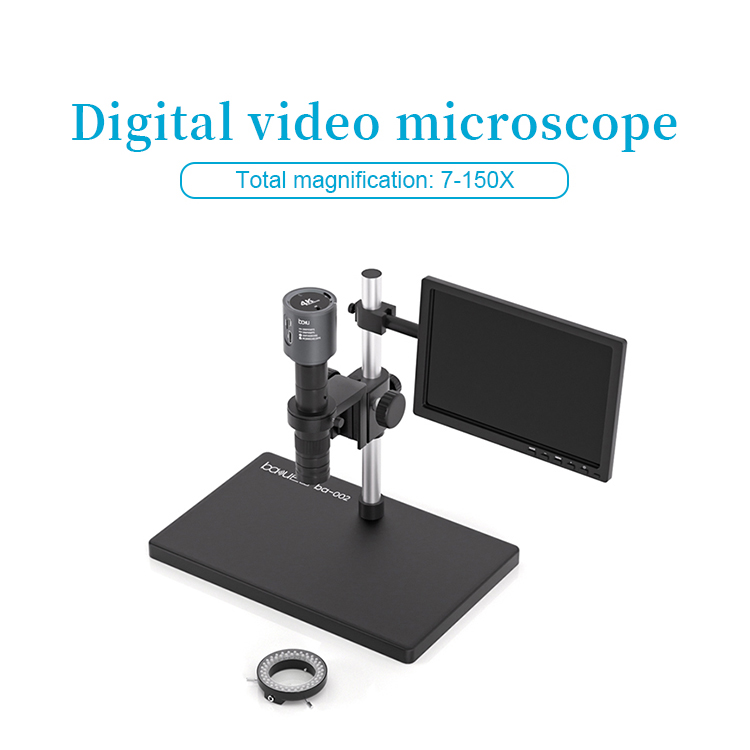
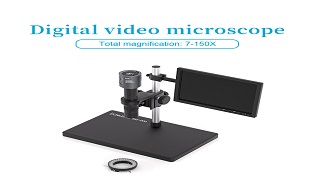
7-150x Stereo Digital Microscope
The defining feature of a stereo microscope is its dual optical system. Each eyepiece receives its own image through a dedicated optical channel, allowing both eyes to see the specimen from slightly different angles. This creates a realistic 3D effect and helps users judge distances accurately — something important when working with tools.
Stereo microscopes typically operate between 5× and 50× magnification, although some digital models extend far beyond this range. This level of magnification is perfect for detailed surface inspection rather than cellular-level observation.
One of the biggest advantages of a stereo microscope is its long working distance — the space between the objective lens and the specimen. This allows users to place tools, tweezers, soldering irons, or probes under the lens while still viewing the workpiece clearly. In electronics and jewelry applications, this is invaluable.
Stereo microscopes often use top lighting (reflected light) to brighten up solid objects. Some models also include bottom lighting (transmitted light) for semi-transparent samples. Adjustable LED ring lights or built-in lamps ensure consistent visibility.
Most modern stereo microscopes feature continuous zoom rather than fixed steps. This allows users to smoothly switch from a wide overview to a close-up view. Adjustable zoom is particularly helpful when inspecting circuit boards, connectors, welding points, or mechanical parts.
Digital stereo microscopes incorporate built-in screens, HD cameras, HDMI output, and image-capture functions. These features enable users to view the magnified object on a large display, record videos, or share images. This is especially useful for training, documentation, and online repair tutorials.
Stereo microscopes are widely used in electronics workshops for precision tasks such as PCB inspection, solder joint evaluation, chip-level repair, and BGA reballing. Depth perception helps technicians work more accurately and avoid accidental damage to tiny components.
In industrial settings, stereo microscopes help professionals check for defects, surface irregularities, assembly issues, and product quality. They are essential tools in automotive, aerospace, watchmaking, and semiconductor manufacturing.
Stereo microscopes are ideal for examining insects, plants, minerals, fossils, and biological specimens. They allow researchers to study surface details and conduct dissections with full visibility.
Jewellers and craftsmen use stereo microscopes to inspect gemstones, evaluate settings, repair fine pieces, and perform precision engraving or polishing.
Stereo microscopes are also used to analyze tool marks, fracture surfaces, fibers, and other physical evidence. The 3D view helps investigators understand how materials were shaped or damaged.
When selecting a stereo microscope, consider the following factors:
A stereo microscope is a versatile tool that offers clear, three-dimensional viewing at practical magnification levels. Its combination of depth perception, long working distance, and flexible illumination makes it indispensable for electronics repair, scientific studies, manufacturing inspection, craftsmanship, and countless other fields.
Modern digital stereo microscopes further enhance functionality with HD imaging, video capture, and display output — making them essential equipment for today’s precision-based industries.
Stereo Microscope Price Guide: What Affects the Cost?
Discover what affects the price of a stereo microscope, including magnification, optical quality, digital features, lighting systems, and build materials. Learn how to choose the right model for electronics repair and precision inspection.
Stereo Microscope Uses: From Science Labs to Electronics Repair
Discover the key applications of stereo microscopes in biology labs, education, micro-soldering, and PCB repair. Learn how 3D magnification improves precision for scientific research and electronics technicians.
Best Stereo Microscope for PCB, Jewelry, and Laboratory Use
Discover the best stereo microscope for PCB repair, jewelry inspection, and laboratory research. Learn essential features, magnification tips, and top professional recommendations.
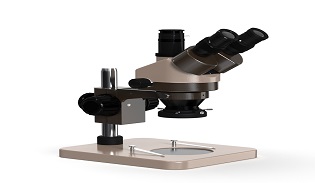
Industrial Stereo Microscope Applications in Electronics and Manufacturing
Discover how industrial stereo microscopes enhance precision in electronics, PCB inspection, micro-assembly, and manufacturing quality control. Learn key applications and benefits.
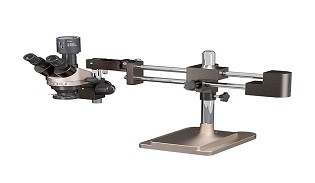
Compound vs Stereo Microscope: What’s the Difference?
Discover the main differences between compound and stereo microscopes, including magnification, applications, and working distance. Choose the right microscope for your needs.
What Is a Stereo Microscope? Key Features and Functions Explained
Learn what a stereo microscope is, how it works, key features, and its uses in electronics repair, manufacturing, and scientific inspection. A complete beginner-friendly guide.

STAY CONNECTED