
In today’s rapidly advancing manufacturing industry, accuracy and reliability are more important than ever. As electronic devices become smaller and more complex, manufacturers must inspect and assemble components that are nearly invisible to the naked eye. This shift toward miniaturization has driven the demand for advanced digital microscopy tools capable of delivering high clarity, powerful magnification, and reliable performance. Industrial digital microscopes have become indispensable instruments in precision manufacturing, offering enhanced visibility, workflow efficiency, and improved product quality.
Precision manufacturing involves handling delicate components, microscopic assemblies, and high-density circuit boards. Even the smallest defect—such as a micro-crack, solder void, or misalignment—can lead to device failure. Traditional optical microscopes, while useful, no longer meet the productivity and documentation needs of today’s electronic production lines.
Digital microscopes provide a modern solution by integrating high-resolution imaging, adjustable magnification, and digital output capabilities. These features enable manufacturers to visualize tiny components with extraordinary clarity, document inspection results instantly, and collaborate more effectively across teams. As a result, digital microscopy has become essential for maintaining quality standards in fast-paced production environments.
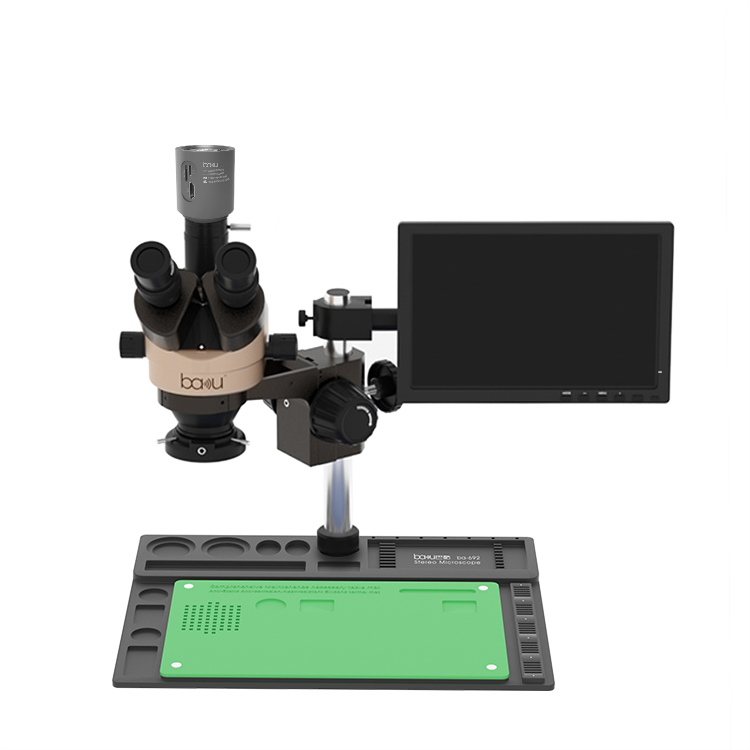
Industrial digital microscopes designed for manufacturing environments typically include several advanced features that make them ideal for inspection, repair, and quality control tasks.
Modern digital microscopes offer a wide magnification range, enabling operators to switch from wide-area viewing to detailed micro-inspection with ease. High-definition sensors and screens ensure that even subtle defects or surface irregularities can be clearly identified.
Many microscopes include built-in HD screens that allow operators to work comfortably without traditional eyepieces. HDMI output is also common, enabling real-time display on external monitors for collaboration, training, or presentation.
A stable stand, durable frame, and precision-engineered focus system help maintain image stability during long hours of operation. This is important for fine soldering, rework, and assembly tasks that require steady hands and consistent magnification.
LED ring lights or adjustable illumination help eliminate shadows and provide uniform lighting, ensuring accuracy during inspection. Flexible brackets and focus adjustments allow the microscope to adapt to different working distances and component sizes.
The ability to store images and record videos directly from the microscope supports documentation, traceability, and quality audits. This is valuable for production records, customer reporting, and internal analysis.
Digital microscopes are used across a wide range of precision manufacturing processes. Their versatility makes them suitable for both mass production and detailed repair work.
Electronic components continue to shrink, making soldering and rework increasingly challenging. Digital microscopes give operators a clear view of SMD components, solder joints, and fine wiring. Real-time magnification helps prevent solder bridges, cold joints, and misalignment.
Manufacturers use digital microscopes to detect imperfections such as scratches, oxidation, cracks, or inconsistencies on circuit boards, connectors, and semiconductor materials. High-resolution imaging ensures that defects are spotted early, reducing the likelihood of product failure.
When defects occur, digital microscopes enable engineers to examine root causes with precision. Detailed images support accurate diagnostics, helping teams identify process issues, material flaws, or assembly errors.
Digital microscopes simplify the creation of inspection reports. Images can be captured, stored, and shared instantly, helping manufacturers maintain strong traceability and comply with developing industry standards.
The integration of digital microscope solutions into modern production lines offers several clear advantages:
These benefits contribute directly to improved productivity and more dependable manufacturing processes.
The ideal digital microscope depends on the specific requirements of your application. General PCB inspection tasks benefit from models with moderate magnification and stable stands. High-precision soldering or micro-component analysis may require microscopes capable of extreme magnification. Portable digital microscopes with built-in screens are ideal for on-site inspections or compact workstations. Features such as storage capacity, illumination control, and HDMI output should also be considered based on workflow needs.
Industrial digital microscopes have become essential tools for modern precision manufacturing. Their ability to deliver high magnification, accurate imaging, and digital documentation enables manufacturers to meet the growing demands of quality, speed, and reliability. As electronic components continue to evolve toward smaller, more compact designs, advanced digital microscopy will play an increasingly important role in ensuring consistent performance and superior product outcomes.
Stereo Microscope Price Guide: What Affects the Cost?
Discover what affects the price of a stereo microscope, including magnification, optical quality, digital features, lighting systems, and build materials. Learn how to choose the right model for electronics repair and precision inspection.
Stereo Microscope Uses: From Science Labs to Electronics Repair
Discover the key applications of stereo microscopes in biology labs, education, micro-soldering, and PCB repair. Learn how 3D magnification improves precision for scientific research and electronics technicians.
Best Stereo Microscope for PCB, Jewelry, and Laboratory Use
Discover the best stereo microscope for PCB repair, jewelry inspection, and laboratory research. Learn essential features, magnification tips, and top professional recommendations.
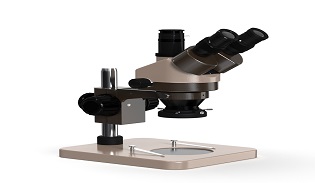
Industrial Stereo Microscope Applications in Electronics and Manufacturing
Discover how industrial stereo microscopes enhance precision in electronics, PCB inspection, micro-assembly, and manufacturing quality control. Learn key applications and benefits.
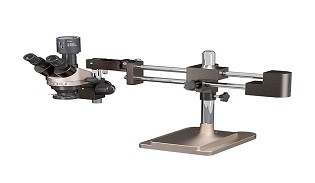
Compound vs Stereo Microscope: What’s the Difference?
Discover the main differences between compound and stereo microscopes, including magnification, applications, and working distance. Choose the right microscope for your needs.
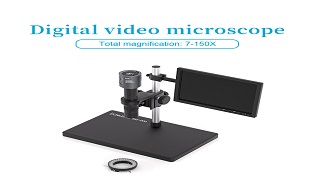
What Is a Stereo Microscope? Key Features and Functions Explained
Learn what a stereo microscope is, how it works, key features, and its uses in electronics repair, manufacturing, and scientific inspection. A complete beginner-friendly guide.

STAY CONNECTED