
Microscopes are essential tools for scientific research, industrial inspection, electronics repair, and everyday educational use. Among the many types available, the compound microscope and the stereo microscope are the two most widely used optical systems. Although both magnify small objects, they serve very different purposes. Understanding these differences is key to choosing the right instrument for your needs, whether you’re working in a laboratory, a classroom, or repairing precision electronics.
A compound microscope is a high-magnification optical device designed to observe tiny, thin, and often transparent specimens. It uses multiple lenses—typically a set of objective lenses combined with an eyepiece—to generate a highly enlarged image of the sample. This setup makes compound microscopes ideal for fields such as biology, medical research, microbiology, and material analysis.
Compound microscopes usually offer magnification levels from 40× up to 1000× or higher, allowing users to inspect cells, tissues, microorganisms, or fine internal structures. The sample is placed on a glass slide, and light passes through the specimen, which means the sample must be thin enough for illumination to reach the observer’s eye.
Because compound microscopes focus on capturing fine details, they have a short working distance, often only a few millimeters between the objective lens and the sample. They are perfect for observing internal detail—but not suitable for working on or manipulating the sample during inspection.
A stereo microscope—also called a dissecting microscope—is designed to provide a three-dimensional view of the sample. Instead of one optical path, it uses two independent paths, delivering separate images to each eye and creating a realistic sense of depth.
Stereo microscopes typically offer low to medium magnification, usually from 6× to 50×, although some models extend beyond this range. This makes them ideal for examining larger, opaque, or solid objects, such as circuit boards, mechanical parts, gemstones, insects, and industrial components.
Unlike compound microscopes, these systems use reflected or incident light, which lights up the surface of the object rather than passing through it. They also feature a long working distance, giving users space to manipulate or repair objects—such as soldering electronic components or assembling miniature parts—while viewing them in real-time.
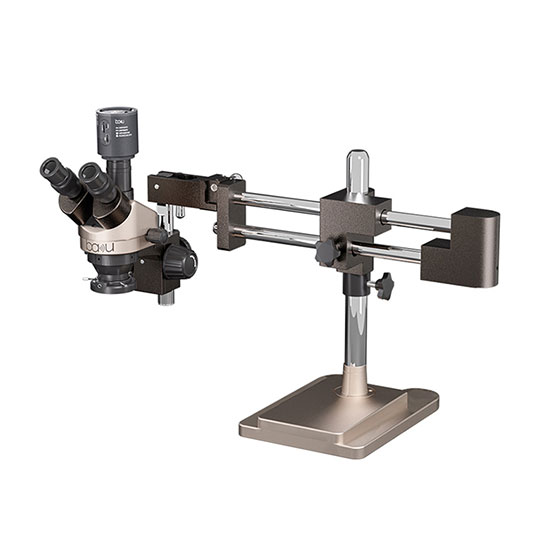
7-45x Trinocular Stereo Zoom Microscope
| Feature | Compound Microscope | Stereo Microscope |
| Magnification | Very high (40×–1000×+) | Low–medium (6×–50×) |
| Image Type | Flat, two-dimensional | Three-dimensional |
| Working Distance | Very short | Long, suitable for hands-on work |
| Sample Type | Thin, transparent specimens | Opaque, solid objects |
| Lighting | Transmitted (light passes through) | Reflected (light shines on surface) |
| Best Use | Biology, cellular studies | Electronics repair, assembly, inspection |
These differences show that each microscope is made for specific types of observation. The right choice depends entirely on the task at hand.
The distinction between these two microscopes becomes especially important when considering how they are used in real-world scenarios. For example, a compound microscope is essential for examining cells or tissue samples where extremely high magnification and transmitted light are necessary. The short working distance is not an issue because there is no need to manipulate the specimen.
On the other hand, a stereo microscope excels in environments that require hands-on work, such as electronics repair, jewelry making, industrial inspection, and assembly tasks. The three-dimensional image helps the user judge depth, alignment, and spacing—key when soldering components, inspecting PCB traces, or placing micro-parts on a board.
In electronics repair, stereo digital microscopes are particularly valuable. They offer clear, high-resolution viewing of micro-components, flexible magnification adjustment, and sufficient working distance for soldering or hot-air rework. These advantages make stereo microscopes the standard tool for technicians, repair centers, and manufacturing QA departments.
When selecting a microscope, consider the following:
While both compound and stereo microscopes play important roles in scientific and industrial fields, they serve very different purposes. A compound microscope is best for examining fine internal details at high magnification, while a stereo microscope is ideal for viewing and manipulating larger, solid objects with three-dimensional clarity.
Choosing the right microscope depends on your application. If you work with biological samples, micro-slices, or need extremely high magnification, a compound microscope is the correct choice. If you’re involved in electronics repair, assembly, industrial inspection, or any task that requires hands-on precision, a stereo microscope will provide better performance, comfort, and accuracy.
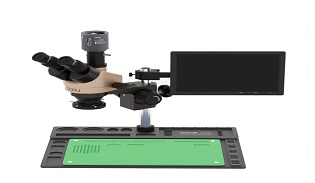
Stereo Microscope Price Guide: What Affects the Cost?
Discover what affects the price of a stereo microscope, including magnification, optical quality, digital features, lighting systems, and build materials. Learn how to choose the right model for electronics repair and precision inspection.
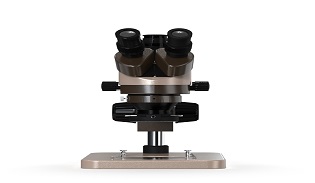
Stereo Microscope Uses: From Science Labs to Electronics Repair
Discover the key applications of stereo microscopes in biology labs, education, micro-soldering, and PCB repair. Learn how 3D magnification improves precision for scientific research and electronics technicians.
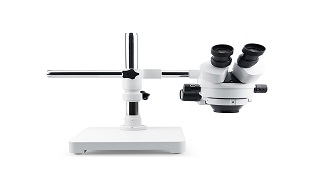
Best Stereo Microscope for PCB, Jewelry, and Laboratory Use
Discover the best stereo microscope for PCB repair, jewelry inspection, and laboratory research. Learn essential features, magnification tips, and top professional recommendations.
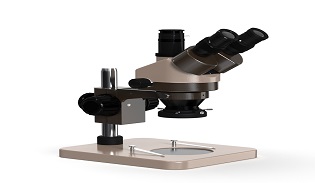
Industrial Stereo Microscope Applications in Electronics and Manufacturing
Discover how industrial stereo microscopes enhance precision in electronics, PCB inspection, micro-assembly, and manufacturing quality control. Learn key applications and benefits.
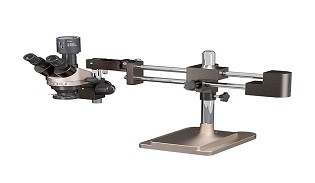
Compound vs Stereo Microscope: What’s the Difference?
Discover the main differences between compound and stereo microscopes, including magnification, applications, and working distance. Choose the right microscope for your needs.
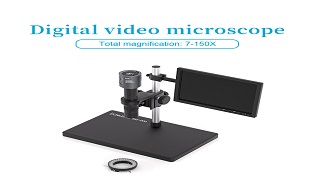
What Is a Stereo Microscope? Key Features and Functions Explained
Learn what a stereo microscope is, how it works, key features, and its uses in electronics repair, manufacturing, and scientific inspection. A complete beginner-friendly guide.

STAY CONNECTED